
For years, the assumption was that transaction banking ran on separate tracks — one team handling payments, another trade finance, another liquidity, each with its own systems and its own conversation with the client. That assumption is breaking down. Corporates no longer want to deal with a bank as a separate stop in their day; they want banking to function quietly inside the systems they already use.
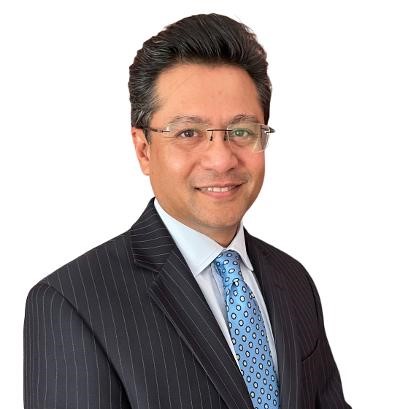
In this conversation with Digital Trade Outlook, Ehsaan Ahmed, Executive Vice President & Head of Transaction Banking at RAKBANK, explains how the UAE and the broader GCC skipped past several stages of banking evolution altogether, where the real gains are showing up in fraud detection and transaction monitoring, and why the industry keeps chasing what’s new while leaving outdated core infrastructure largely untouched.
Digital Trade Outlook–Transaction banking is often described as the backbone of trade, but that description doesn’t fully capture how much the business is evolving. From your perspective, what is the most significant change taking place today, and how is it affecting the way banks support corporate clients?
Ehsaan Ahmed, Executive Vice President & Head of Transaction Banking, RAKBANK: Transaction banking is no longer a business line. It is becoming infrastructure.
The biggest shift is that clients no longer experience banking as a destination; they expect it to disappear into their workflows. Payments, liquidity, and trade finance are being consumed as embedded services, not standalone products.
This shift is particularly pronounced in the UAE and wider GCC, where digital adoption has leapfrogged traditional models. At RAKBANK, we are integrating capabilities into client ecosystems across supply chain finance, payments, and ERP-linked solutions.
Banks that continue to think in terms of products will become utilities. Those that think in terms of integrated ecosystems will remain relevant.
Corporate expectations around payments, liquidity, and working capital have changed considerably in recent years. Where are those expectations having the greatest influence on product and service decisions at RAKBANK, and where do you believe the industry still has work to do?
Corporate expectations in the GCC have evolved faster, and differently, than in many markets.
Clients demand real-time visibility, cross-border transparency, and seamless working capital access. At RAKBANK, we are enabling procurement digitisation through virtual cards, ERP integration, and data-led expense solutions.
However, trade finance remains fragmented and documentation-heavy, given the handoffs across multiple stakeholders involved in the successful execution of cross-border transactions. Until end-to-end integration is achieved, digitisation will remain incomplete.
AI has become a major topic across financial services. Within transaction banking, where have you seen it deliver meaningful value, and which areas have proven more difficult to transform than many expected?
AI is already delivering value in operational intelligence and risk mitigation: fraud detection, transaction monitoring, client servicing, and efficiency gains.
In the GCC, it supports banks in scaling volumes while managing regulatory complexity. However, trade finance transformation remains constrained by fragmented data and multi-jurisdictional complexity.
AI amplifies structure, processing, and monitoring. Without standardisation, its full impact remains limited.
Modern transaction banking increasingly relies on collaboration between banks, fintechs, technology providers, and infrastructure partners. What role have partnerships played in RAKBANK’s transformation journey, and where do you see the biggest opportunities for collaboration in the years ahead?
The era of vertically integrated banking is over. At RAKBANK, partnerships are central to how we build the business in a competitive environment where time to market is critical. In supply chain finance, we collaborate with fintechs and ecosystem players to deliver scalable solutions for large corporates and SMEs alike.
The future lies in embedded value propositions built across the transaction banking ecosystem.
RAKBANK operates in a market alongside some of the region’s largest financial institutions. What does building a successful transaction banking business at your scale require, and where can agility provide a genuine advantage?
Scale is often misunderstood. Relevance is defined by execution, not size. RAKBANK follows a dual strategy: serving SMEs and mid-sized corporates, while growing engagement with larger corporates across both private and public sectors.
SMEs require simplicity; large corporates demand deep integration and scalable solutions. We are able to serve both by leveraging our capabilities and the depth of our relationships. Despite our local UAE footprint, we service international needs through strong correspondent and partner networks. Our scale enables fast decision-making, and agility is our genuine competitive advantage.
Looking ahead, what do you think the industry is paying too much attention to, and what important trend or challenge is not receiving enough attention?
The industry is overestimating technology-led transformation and underestimating the importance of fundamentals.
The focus on AI and digital assets as emerging trends risks overshadowing the core challenge: successfully upgrading legacy platforms to support fast-evolving client demands and business growth. In transaction banking, the future will be defined by how effectively banks enable corporates to optimise their working capital cycle, seamlessly, across partner ecosystems.
The conversation continues
Join the discussion on LinkedIn
RAKBANK shared this interview on LinkedIn. Read what peers are saying and add your view.
Across 2 LinkedIn posts, as of 15 October 2026
- Also on the Digital Trade Outlook page7 reactions